
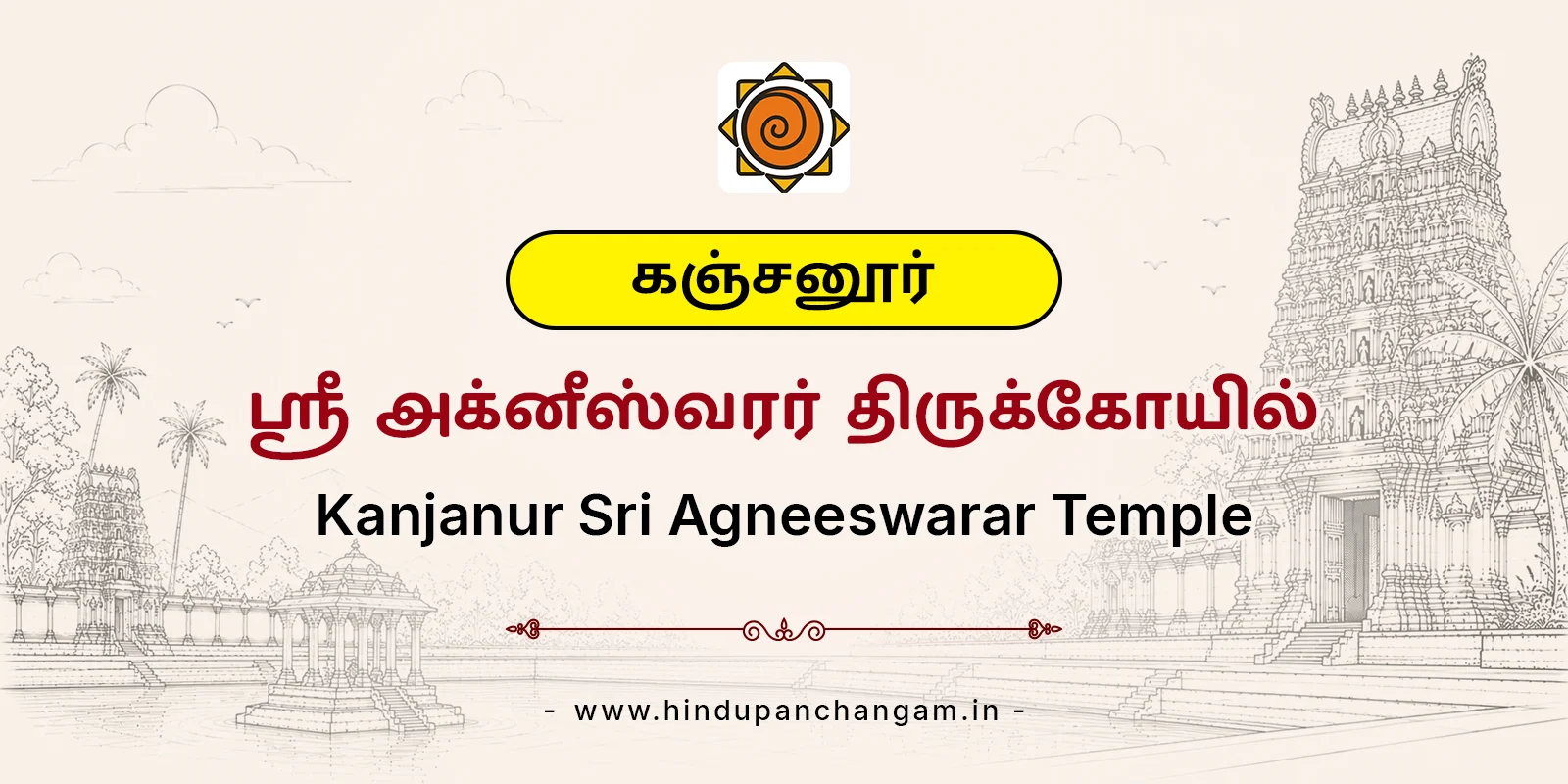
Kanjanur Sri Agneeswarar Temple
Sri Agniswarar Temple at Kanjanur is one of the most important Navagraha Parihara Sthalams of Tamil Nadu and is traditionally associated with Shukra (Venus).
The presiding deity is Lord Agniswarar, with Goddess Karpagambigai as the Divine Mother. The temple stands on the northern bank of the River Kaveri, near Kumbakonam, and is celebrated as a sacred Shaiva kshetra connected with several ancient legends involving Agni, Shukracharya, Brahma, Chandra, Parasara Maharishi and Haradatta Sivacharyar.
Kanjanur is especially significant in Shukra worship because there is no separate shrine for Shukra as found in some other Navagraha temples. Lord Shiva Himself is worshipped here as the divine presence through which Shukra's grace is received.
The temple is also associated with the sacred traditions of Haradatta Sivacharyar and Manakkanchara Nayanar, adding great spiritual and historical significance to this holy place.
| Moolavar | Sri Agneeswarar |
|---|---|
| Goddess | Sri Karpagambigai |
| Tradition | Shaivam |
| Theertham | Agni Theertham, Parasara Theertham |
| Timings | 6:00 AM - 12:00 PM, 4:00 PM - 8:00 PM |
Best Time to Visit
Kanjanur can be visited throughout the year.
For Shukra worship, Fridays are traditionally preferred.
For devotees interested in the temple's Shaiva traditions and Haradatta Sivacharyar, the Tamil month of Thai is particularly significant.
For a more comfortable temple visit, the relatively cooler months from December to February are generally convenient.
Why this temple is a Parigara Sthalam
To understand why Kanjanur is the ultimate remedy center, one must understand the powerful role of Venus (Sukra) in Vedic astrology. Sukra is known as the Kalathra Karaka—the absolute celestial indicator of marriage, life partners, love, romance, and marital harmony. Beyond relationships, Sukra governs all the luxurious and pleasant aspects of human existence: wealth, prosperity, vehicles, beauty, artistic talents, and sensual pleasures.
When a person has an afflicted, debilitated (Neecha), or malefic Sukra in their horoscope (a condition known as Sukra Dosha), they face severe life blockages. This typically manifests as an inability to find a suitable bride or groom, continuous misunderstandings leading to separation or divorce, lack of financial stability, infertility, and health issues related to the reproductive system or kidneys.
Kanjanur is the supreme Parigara Sthalam because it addresses this specific planetary energy directly at its cosmic source. Since Lord Shiva Himself stands as Sukra here, the divine vibration of the temple acts as a direct cosmic filter. Worshipping at this specific geographical and spiritual coordinate neutralizes the negative radiation of an afflicted Venus in one's birth chart. Devotees believe that the intense penance performed by Sukracharya here saturated the very soil with pure Venusian energy, making it a powerful portal where prayers for marriage, domestic bliss, and financial breakthrough are instantly answered by Lord Agniswarar.
Who should worship?
Sukra (Venus) is the most powerful benefic planet after Jupiter. You should worship Sukran if you are facing:
- Marriage & Relationship Issues: Since Sukra is the Kalathra Karaka (significator of the spouse/marriage), anyone facing delays in marriage, lack of harmony with their partner, or seeking a good life partner must worship him.
- Financial & Material Struggles: Sukra governs wealth, luxury, vehicles, and comfort. If you are struggling to buy a house, a car, or accumulate wealth, his blessings are essential.
- Career in Arts & Glamour: Professionals in cinema, music, fashion, beauty, cosmetics, and the arts need a strong Venus to achieve fame.
- Health Issues: Those suffering from reproductive issues, kidney ailments, or eye problems.
- Astrological Doshas: Individuals undergoing Sukra Mahadasa or Sukra Antardasa, or those who have Sukra placed in a weak (Neecha) or afflicted position in their birth chart.
Mantra & Slokam
Chanting this mantra 108 times on Fridays, especially during Sukra Hora (around 6 AM, 1 PM, or 8 PM), brings immense wealth, beauty, and marital harmony.
Om Aswadhwajaaya Vidhmahe Dhanur Hasthaaya Dheemahi Thanno Sukra Prachodhayaath
Parigaram Items
| Item | Purpose |
|---|---|
| Mochai (White Beans) | Naivedyam |
| White Cloth (Vastram) | Donate |
| White Lotus / Jasmine | Pooja |
| Silver / Diamond | Wearing Ornament |
How to perform Parigaram at home
Fasting & Cleanliness: Keep your house impeccably clean and fragrant (Venus loves cleanliness and good scents). Observe a fast on Fridays.
Pooja: On Friday morning or evening, place a picture of Goddess Mahalakshmi (the Adhidevata of Sukra). Light a silver lamp or a diya with ghee, preferably using a wick made from a lotus stem (Thamarai thandu thiri).
Offering: Offer white flowers like White Lotus or Jasmine. Prepare a Naivedyam (food offering) of boiled white beans (Mochai) or any white milk-based sweet (like Kheer/Payasam).
Chanting & Attire: Wear clean, washed white or light pink clothes. Sit facing East or Southeast and chant the Sukra Gayatri Mantra 108 times. Spray a little rose water or mild perfume on yourself before the pooja.
Sthala Puranam (Legend)
Shukracharya and Lord Shiva
Shukracharya, the preceptor of the Asuras, was a great devotee of Lord Shiva.
When Mahabali was preparing to offer the promised three steps of land to Lord Vishnu in His Vamana form, Shukracharya tried to prevent the offering because he understood the divine purpose behind Vamana's request. He assumed the form of a tiny being and obstructed the opening of Mahabali's kamandalu.
Vamana pierced the obstruction with a blade of darbha grass, causing injury to one of Shukracharya's eyes.
Shukracharya then undertook severe penance to Lord Shiva. Through the grace of Mahadeva, he attained the status of Shukra Graha and became the radiant Venus among the Navagrahas.
The sacred connection between Shukracharya and Lord Shiva is one of the foundations of Kanjanur's importance as the Shukra Parihara Sthalam.
Agni Bhagavan's Worship
Agni Bhagavan once suffered from a serious affliction after receiving a curse connected with a sacred yajna. Following Brahma's guidance, he came to this sacred place, created a holy water source and worshipped Lord Shiva.
Through the grace of Lord Shiva, Agni was freed from his affliction.
Because Agni worshipped Shiva here, the Lord came to be known as Agniswarar, meaning the Lord associated with Agni.
The sacred water created by Agni became known as Agni Theertham.
Parasara Maharishi and Mukti Tandava
Parasara Maharishi performed penance here seeking the divine vision of Lord Shiva.
Pleased with his devotion, Lord Shiva manifested before Parasara Maharishi and revealed His sacred Mukti Tandava.
The Nataraja Sabha of this temple preserves this sacred tradition, and the place is therefore deeply connected with Shiva's dance of liberation.
Brahma's Wedding Darshan
Brahma also performed worship at Kanjanur and received the divine vision of Lord Shiva and Goddess Parvati in their sacred wedding form.
Because Brahma received this auspicious darshan here, the temple is especially associated with divine marriage blessings.
Haradatta Sivacharyar
Kanjanur is also the sacred birthplace of Haradatta Sivacharyar, who became renowned for revealing the greatness of the Panchakshara Mantra.
He was born as Sudarshana in a Vaishnava family. From childhood, however, his heart was deeply devoted to Lord Shiva. He embraced Vibhuti, Rudraksha and Shiva worship with unwavering devotion.
When people questioned his faith, he demonstrated the power of Shiva's grace and the greatness of the Panchakshara mantra.
Lord Dakshinamurthy appeared to him, gave him Shiva Diksha and bestowed upon him the name Haradatta Sivacharyar.
His life became a shining example of unwavering devotion to Lord Shiva, and a separate shrine commemorates his sacred connection with Kanjanur.
Manakkanchara Nayanar
Kanjanur is also connected with the sacred tradition of Manakkanchara Nayanar, one of the revered 63 Nayanmars.
His unwavering devotion and willingness to offer everything for the service of Lord Shiva stand as an inspiring example of the greatness of Shaiva devotion.
Parigaram (Remedy)
To appease Sukra, devotees perform specific offerings directly to Lord Agniswarar:
- Grain: Offering Mochai (White field beans), the favored grain of Sukra.
- Flower: Garlands made of Vellai Thamarai (White Lotus).
- Vastram: Offering a pure white cloth (silk or cotton).
- Lighting Lamps: Lighting ghee lamps on Fridays, especially during Sukra Hora (6 AM - 7 AM, 1 PM - 2 PM, or 8 PM - 9 PM).
What to do when you visit
A meaningful visit can follow this order:
Ganesha → Agniswarar → Karpagambigai → Dakshinamurthy → Nataraja → Navagrahas → Shukra-related worship → Haradatta Sivacharyar
Spend a few quiet moments before Lord Agniswarar and pray for the specific blessing you seek.
If visiting for marriage or relationship-related prayers, worship Goddess Karpagambigai with equal devotion, as the Divine Mother represents grace, protection and auspiciousness.
Before You Visit
- Prefer Friday if your purpose is specifically Shukra Pariharam.
- Wear clean and modest traditional clothing.
- Carry flowers or other offerings if desired.
- If you require a specific abhishekam or archana, confirm the availability at the temple before travelling.
- During major festivals, expect larger crowds.
- Check the temple opening hours before beginning a long-distance journey.
Special Rituals / Abhishekam
Special worship at Kanjanur centres around Lord Agniswarar and Goddess Karpagambigai.
Devotees may perform:
- Archana
- Abhishekam
- Vastra offering
- Shukra-related worship on Fridays
- Special prayers for marriage and family harmony
- Offerings of white clothes, flowers and traditional food items
When a prayer is fulfilled, devotees traditionally return to the temple and offer worship as a form of thanksgiving.
Learn More
In Vedic astrology, Sukra (Venus) is the preceptor (Guru) of the Asuras (demons), known as Sukracharya. However, he is a highly benefic planet. While Jupiter (Guru) represents traditional wisdom, spirituality, and divine knowledge, Sukra represents worldly knowledge, arts, aesthetics, diplomacy, and materialistic comforts. Sukra gives the knowledge of how to enjoy life on Earth. He rules over passion, romance, creativity, and the "good things in life." A strong Venus makes a person charismatic, attractive, and diplomatic. Interestingly, Sukracharya possessed the Mrita Sanjeevini mantra (the knowledge to bring the dead back to life), making him a master of medicinal and life-saving sciences as well.
Sukra teaches us that prosperity is not merely about possessing wealth.
True Venusian prosperity means Having love without possessiveness, wealth without arrogance, beauty without vanity, pleasure without excess, and relationships filled with mutual respect.
Therefore, Sukra worship is not simply a remedy for marriage or money. It is a spiritual practice of learning to appreciate love, beauty, harmony, generosity and the blessings of life.
Charity / Daana
Charity done on Fridays yields the best results for strengthening Venus.
- Donate white-colored items like Rice, Sugar, Milk, or White Clothes to needy women or widows.
- Donating cosmetics, perfumes, or items of beauty to married women (Sumangalis) brings immense marital blessings.
- Feeding cows (especially white cows) with Agathi leaves, grass, or fruits on Fridays is considered one of the highest forms of Sukra Parigaram.
Key Facts
Favorable / Unfavorable Signs
Own House (Swakshetra): Taurus (Rishaba) and Libra (Thula). Sukra is highly comfortable and powerful here.
Exalted (Ucha): Pisces (Meena). Here, Sukra reaches his maximum power, delivering boundless wealth, luxury, and artistic brilliance.
Debilitated (Neecha): Virgo (Kanni). Sukra is at his weakest here, often causing relationship hurdles and financial instability, requiring remedies.
Friendly Planets: Mercury, Saturn, Rahu.
Enemy Planets: Sun, Moon.
Festivals
Important festivals celebrated at Kanjanur include:
- Maha Shivaratri
- Arudra Darshan
- Navaratri
- Aadi Pooram
- Maasi Magam
- Thai month Haradatta Sivacharyar festival
- Special Friday worship associated with Shukra
The Haradatta Sivacharyar festival during the Tamil month of Thai is especially significant because of his sacred association with this temple.
How to Reach
From Kumbakonam: Kanjanur is approximately 16–18 km from Kumbakonam.
From Aduthurai: The temple is located a short distance from Aduthurai and can be reached by road through the Aduthurai–Kuthalam route.
From Mayiladuthurai: Kanjanur is approximately 20 km from Mayiladuthurai.
From Suryanar Kovil: The famous Suryanar Kovil is approximately 2–3 km away, making it convenient to combine both temples in one pilgrimage route.
Bus services are available from Kumbakonam and Mayiladuthurai, while the temple can also be reached conveniently by car or taxi.
Nearby Temples
| Temple | Distance |
|---|---|
| Suriyanar Koil (Sun Temple) | 3 km |
| Thirumangalakkudi Prananatheswarar Temple | 3.5 km |
| Sri Mahalinga Swamy Temple, Thiruvidaimarudur | 7 km |
| Swamimalai Murugan Temple | 25 km |
Location Map
Is this temple right for you? Know your chart.
Find out which dosha affects your chart, the parigara temple best suited to you, and the exact remedies to perform — in a 30-minute personal consultation with Jyotishacharya Sermaraj.
₹499 — Book Personal Consultation → Jyotishacharya S. Sermaraj M.B.A. · HinduPanchangam.in · 04 Sep 2026